what
who
where
Back
news story

Blame creativity, put your hope in it too
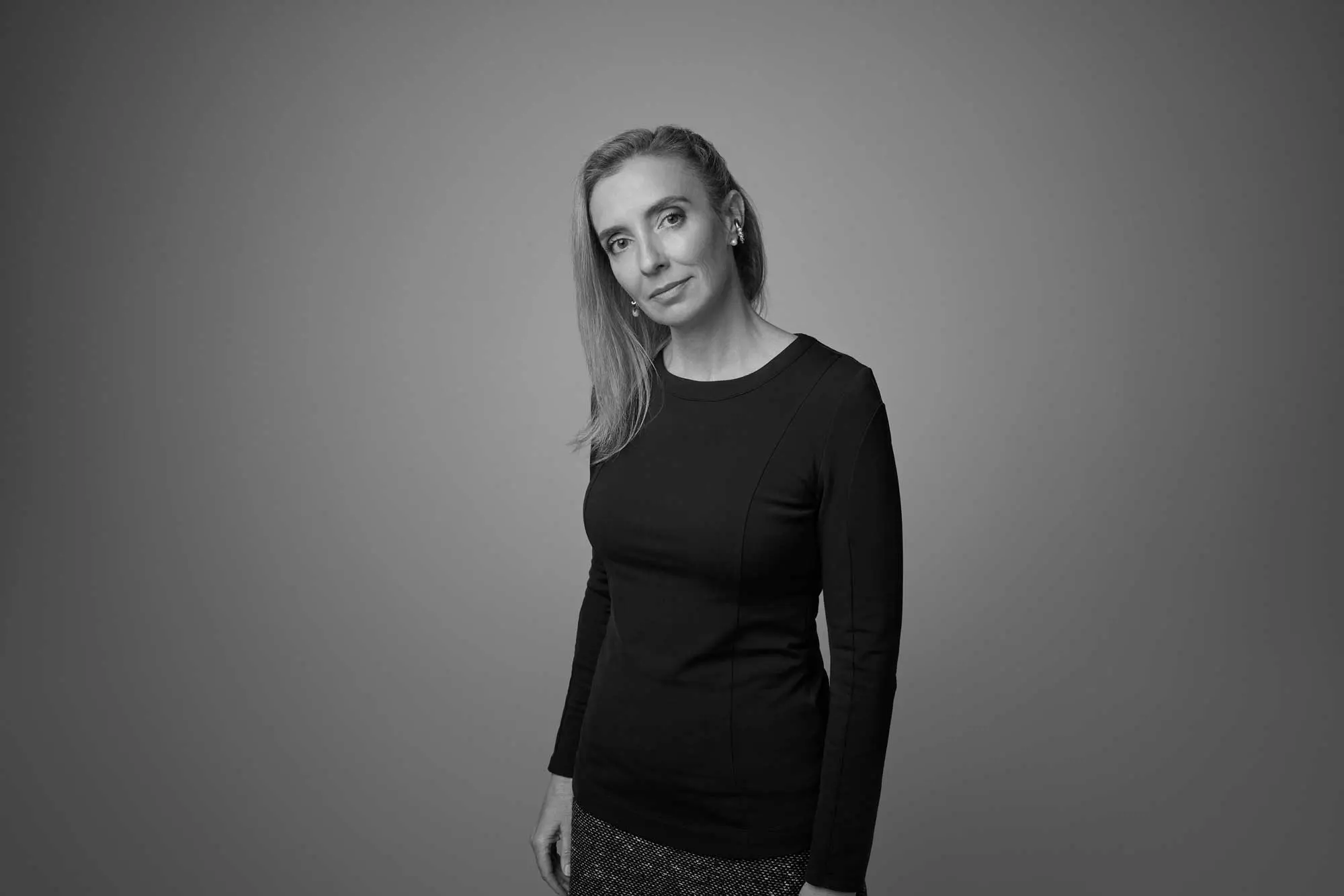
Mandie van de Merwe - Chief Creative Officer, Saatchi & Saatchi ANZ
Yes, this is another article about AI. It is, after all, a perspective on 2025. This is the year when everything is AI. But this might not be the opinion on AI you were expecting.
Like most of us in this industry, I’ve been overwhelmed by the deluge. AI masterclasses promising salvation, conference panels predicting collapse, LinkedIn feeds filled with people pivoting to “prompt engineering”, colleagues whispering about agents coming for our jobs.
But amidst all the noise, one question feels missing. One question that turns the spotlight back on us. Where did the AI reality we’re living in actually come from?
AI didn’t slip out of a technological black hole. It wasn’t conjured up by data-obsessed founders in fancy hoodies. And it didn’t originate from code.
AI came from imagination. It began as narrative. As fiction. It was born from creativity.
For decades, the writers we dismissed as dreamers were sketching blueprints for our present. William Gibson’s Neuromancer explored neural interfaces long before neurotech. Spike Jonze’s Her didn’t just portray AI intimacy, it prototyped interface empathy. Isaac Asimov’s Foundation (written in 1951) modelled predictive science before “machine learning” was a thing. Even xAI’s “Grok” nods to Robert Heinlein’s work.
Before Neuralink and ChatGPT, the concepts behind them were founded in the fertile imaginations of authors who didn’t realise their narratives would someday drive global markets, social relationships and brand strategy.
Creatives didn’t predict the future. They briefed it. Then someone went out and built it.
In 2025, the threat isn’t AI. The danger isn’t in machine thinking. It’s in us forgetting how to think. The real risk is a drought of creativity: a slow surrender of our visions to something that cannot wonder.
We forget that we shaped what is here, and that we can shape what comes next.
From an industry perspective, the conversation we seem hellbent on having is centred around whether AI can “mock up a layout” or “shoot the next ad”. That myopic focus means we’re missing the real shift in the market and the actual role for creativity in getting onto agents’ radars.
Search and discovery are collapsing into single, AI-mediated responses. Agents are fast becoming the new top of the funnel. “Explore, compare, choose” is turning into “ask, answer, act.”
Google’s AI Overviews, Amazon’s Rufus, in-chat commerce on TikTok and WhatsApp - these aren’t edge experiments. They’re early blueprints for automated selection. Instead of 10 Chrome tabs (let’s be honest, more like 20 tabs) and wandering purchase journeys, people will receive AI-filtered brand shortlists they’ll trust.
If you’re not on the agent’s shortlist, you don’t exist.
That should be the wake-up call of 2025.
Here’s the kicker: AI agents aren’t only responding to your media budget. They’re trained on signals of fame. Fame driven by the stories, symbols and cultural traces your brand leaves behind. These signals aren’t automated. They’re earned. And they’re built on bold, memorable, creative ideas.
Any CMO who still believes SEO or retail media alone will carry them forward should take heed. “Solid products” and “efficient performance” are no longer enough. Mental availability (the Ehrenberg-Bass kind) still matters, but it’s shifting from human memory to machine retrieval. Distinctiveness is becoming a metadata feature. Cultural currency is fast becoming a performance metric. You can’t yet buy your way into an AI model if no one’s cared enough to write about you, review you, parody you or argue your existence on Reddit.
Put simply: culture-led creativity, machine-legible brand architecture and retail precision will drive discoverability in an agent-led world. 2026 will reward brands that create machine legibility - brands whose creativity is structured clearly enough for algorithms to recognise and interesting enough for culture to remember.
Gibson, Asimov, Heinlein - they imagined the impossible. And today, we live in their impossible worlds. Perhaps we can blame these dreamers for the reality we’ve inherited. But our industry cannot afford to stop imagining what comes next. We must not hand over our creative visions to things that cannot dream. Because the only impossible future worth chasing should be a human one. And the only force capable of imagining it is a creative one.
Yes, this is another article about AI. It is, after all, a perspective on 2025. This is the year when everything is AI. But this might not be the opinion on AI you were expecting.
Like most of us in this industry, I’ve been overwhelmed by the deluge. AI masterclasses promising salvation, conference panels predicting collapse, LinkedIn feeds filled with people pivoting to “prompt engineering”, colleagues whispering about agents coming for our jobs.
But amidst all the noise, one question feels missing. One question that turns the spotlight back on us. Where did the AI reality we’re living in actually come from?
AI didn’t slip out of a technological black hole. It wasn’t conjured up by data-obsessed founders in fancy hoodies. And it didn’t originate from code.
AI came from imagination. It began as narrative. As fiction. It was born from creativity.
For decades, the writers we dismissed as dreamers were sketching blueprints for our present. William Gibson’s Neuromancer explored neural interfaces long before neurotech. Spike Jonze’s Her didn’t just portray AI intimacy, it prototyped interface empathy. Isaac Asimov’s Foundation (written in 1951) modelled predictive science before “machine learning” was a thing. Even xAI’s “Grok” nods to Robert Heinlein’s work.
Before Neuralink and ChatGPT, the concepts behind them were founded in the fertile imaginations of authors who didn’t realise their narratives would someday drive global markets, social relationships and brand strategy.
Creatives didn’t predict the future. They briefed it. Then someone went out and built it.
In 2025, the threat isn’t AI. The danger isn’t in machine thinking. It’s in us forgetting how to think. The real risk is a drought of creativity: a slow surrender of our visions to something that cannot wonder.
We forget that we shaped what is here, and that we can shape what comes next.
From an industry perspective, the conversation we seem hellbent on having is centred around whether AI can “mock up a layout” or “shoot the next ad”. That myopic focus means we’re missing the real shift in the market and the actual role for creativity in getting onto agents’ radars.
Search and discovery are collapsing into single, AI-mediated responses. Agents are fast becoming the new top of the funnel. “Explore, compare, choose” is turning into “ask, answer, act.”
Google’s AI Overviews, Amazon’s Rufus, in-chat commerce on TikTok and WhatsApp - these aren’t edge experiments. They’re early blueprints for automated selection. Instead of 10 Chrome tabs (let’s be honest, more like 20 tabs) and wandering purchase journeys, people will receive AI-filtered brand shortlists they’ll trust.
If you’re not on the agent’s shortlist, you don’t exist.
That should be the wake-up call of 2025.
Here’s the kicker: AI agents aren’t only responding to your media budget. They’re trained on signals of fame. Fame driven by the stories, symbols and cultural traces your brand leaves behind. These signals aren’t automated. They’re earned. And they’re built on bold, memorable, creative ideas.
Any CMO who still believes SEO or retail media alone will carry them forward should take heed. “Solid products” and “efficient performance” are no longer enough. Mental availability (the Ehrenberg-Bass kind) still matters, but it’s shifting from human memory to machine retrieval. Distinctiveness is becoming a metadata feature. Cultural currency is fast becoming a performance metric. You can’t yet buy your way into an AI model if no one’s cared enough to write about you, review you, parody you or argue your existence on Reddit.
Put simply: culture-led creativity, machine-legible brand architecture and retail precision will drive discoverability in an agent-led world. 2026 will reward brands that create machine legibility - brands whose creativity is structured clearly enough for algorithms to recognise and interesting enough for culture to remember.
Gibson, Asimov, Heinlein - they imagined the impossible. And today, we live in their impossible worlds. Perhaps we can blame these dreamers for the reality we’ve inherited. But our industry cannot afford to stop imagining what comes next. We must not hand over our creative visions to things that cannot dream. Because the only impossible future worth chasing should be a human one. And the only force capable of imagining it is a creative one.
2026 © SAATCHI & SAATCHI