what
who
where
Back
news story

5 Minutes with Avish Gordhan
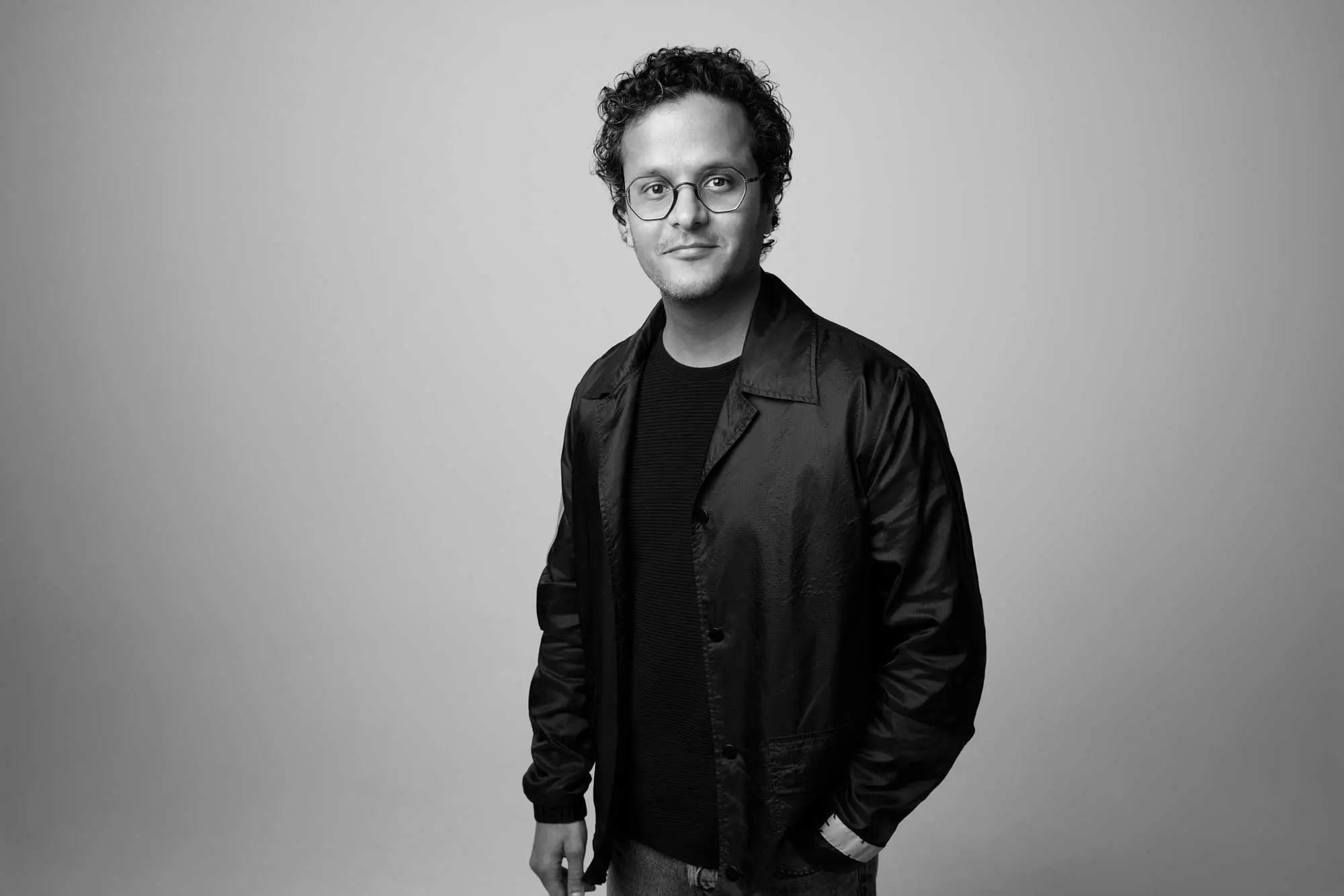
Avish Gordhan grew up in Apartheid-era South Africa, in an Indian-only estate. The youngest of three, he loved basketball and solving problems. The violence he saw taught him how to think. He ended up studying at the AAA School of Advertising, getting a job at TBWA in Johannesburg, and eventually moving to Sydney to work under Dave Bowman and Matty Burton.
He’s now co-CCO at Saatchi & Saatchi, alongside his creative and life partner, Mandie van der Merwe. Here, he tells LBB’s Brittney Rigby why his upbringing proved you shouldn’t ask permission, what he learned about endurance from running a marathon, and why he cares more about baking and ceramics, in his spare time, than advertising.
LBB: Where and how did you grow up?
Avish: I grew up in an Indian-only area in South Africa. It was called Clare Estate. It was segregated so that only Indians could live there. It is a pretty relatively poor neighbourhood and could be a bit dangerous, but I grew up in a family that was really close and made me feel quite safe. On the outside, there was this dangerous place but, on the inside of our house, it was quite safe.
Avish: I grew up in an Indian-only area in South Africa. It was called Clare Estate. It was segregated so that only Indians could live there. It is a pretty relatively poor neighbourhood and could be a bit dangerous, but I grew up in a family that was really close and made me feel quite safe. On the outside, there was this dangerous place but, on the inside of our house, it was quite safe.
This was in the 80s, so I experienced Apartheid and the exclusion and segregation that happened. But then in the 90s, I experienced being able to try a career that otherwise I would not have been able to try. I saw a lot of violence. I experienced riots, and a couple of times there was a man with a knife in his chest in our backyard.
But the people are really beautiful and there's a real generosity and a real sense of joy. It's interesting, when you grow up around contradictions, it teaches you how to think. You learn how to find humour when it's quite dark. You learn to make something out of nothing. You don't wait for permission, because it will never come. You distrust anything that pretends to be simple.
LBB: It takes a lot of people a long time to figure out that two things can be true at once. It sounds like you've always fundamentally known that.
Avish: The one thing I've always loved about South Africa, and South Africans in general, is that in the worst possible time, they will find a way to make a joke. Like highly inappropriate times to laugh, that's when South Africans usually find the best comedy. It’s that ability to realise that you can look at it in whichever way you want to get through it.
LBB: Do you have siblings?
Avish: Two older sisters. I was the one they picked on. There's about a 10-year gap between me and my oldest sister and she is a proper science buff, nerd, trained pharmacist, medical person. And then my middle sister is also in advertising but a trained modern contemporary dancer, does martial arts, and is a copywriter and used to be a CCO at a company in South Africa.
LBB: What did you most love doing as a kid and at what point did you start to grapple with what you wanted to be and do when you got older?
Avish: I had a basketball hoop. I used to practise playing a lot of basketball when I was a kid and I insisted to my dad to put the basketball up at the official NBA height. I don't know if I ever dreamed of being a basketball player but I put in the effort. But if you've ever met me and if you know me, you'll know how tragic a dream that is. My latest growth spurt was probably in my late 30s and I'm only five foot four. So one day I might get to the right height to be playing basketball. I was always quite physical as a kid. I liked being outside.
The truth is, advertising, I actually didn't know it existed as an industry, as a job, until about six months before I applied for the AAA School of Advertising in South Africa. It wasn't a thing that the Indian community in South Africa knew about.
Even once I started studying it, I didn’t know that was what I wanted to do until I was probably two years into studying it because it was only when I figured out that my job is to solve puzzles in really unconventional ways. When I figured that out, I was like, 'Oh, that's a nice thing to get paid to do.'
LBB: I was listening to Australian author Emily Maguire give a keynote on how varied and wildly contradictory and unconnected the references were that led her to write her latest book. She calls them creative collisions. And I wonder how you are guided by what gets your attention, or decide what keeps your attention, or what you seek out, so you can connect things that other people might not?
Avish: I actually don't spend a lot of time looking at advertising. I find it dulls me as a creative person. Also, I'm in a relationship with my creative partner [Mandie van der Merwe, co-CCO at Saatchis], so I need a break from the industry, and I wake up next to it every day, so I look for other things.
Last night, Mandie and I went to this amazing dance performance called Clouds Still Know My Name. It was up on the fourth floor of a car park. Tonight, I'm gonna go shake my limbs at Camelphat. I like long-form journalism. I like ceramics, I like baking. And I think the thing that I look for when it comes to deciding how you spend your time and how you get your influence and how get your stimulus to be able to do the job – I like to focus on things that can expose me to making and thinking in ways that advertising can't.
LBB: You moved to Australia in 2012. Why did you come and why have you stayed?
Avish: I left South Africa because I was looking for exposure to big digital thinking. It was 12 years ago and South Africa was slightly behind the curve in terms of that. I wanted to experience bigger digital frameworks, bigger digital ideas. I wanted to work in a new market. I wanted to work in a market that respected comedy.
And this job travels well, so I wanted to have the adventure. We researched agencies and places we wanted to work at and people we wanted to work with, and I was lucky enough that the stars aligned and I ended up working with Dave Bowman and Matty Burton. To be honest, I didn't think we'd stay. It's a bit of an advertising Australian cliche, but I actually still have stuff in storage. That's how confident I was that I was going to go back. But it's the land of milk and honey. I've found people here who value bravery and who value hard work, and I don't mind being brave or working hard, so it kind of fits.
LBB: What do you most want from your creatives and your clients this year?
Avish: I mean, our mantra at Saatchi & Saatchi is that nothing is impossible. So from my creatives, I want them to push the boundaries of that statement. I want the thing that looks like magic. I want originality that isn't drowned in rationality. We always say we want to give our clients an unfair emotional advantage, so that's what I want from the creatives.
From our clients: optimism. When you think of 'Nothing is impossible', it isn't about restraining ideas so they become possible. It's about taking a highly positive view and focusing on the upside of doing what hasn't been done.
LBB: Sharp left turn. I saw you ran a marathon last year, which sounds truthfully like my absolute worst nightmare. What did it teach you?
Avish: It taught me that my knees are older, that I'm probably not as young as I thought I was when I started training for it. It was hard. I'm not gonna lie, it was probably one of the toughest things I've ever done physically. I'd run a few half marathons, and I was like, 'Oh, it's only going to be double that.'
To be honest, when I started training for the marathon, I was pretty unfit. I could barely run three Ks without really huffing and puffing. You don't wake up one day and go, I can run 42 Ks. You have to focus on literally going from three to three and a half to four to four and a half to five to six to seven. It's really slow progress. It took five or six months.
And I think from a creative perspective, it is true. You don't get a big career, you don't get big ideas, you don't get beautiful lives just by getting there quickly. Everything is built incrementally. It's built with discipline, it's built with healthy amounts of doubt and realism and persistence. So I think probably the thing that I took away from it was that you've just got to put the work in. Take the slow path. Endurance will beat intensity every single time.
I didn't think I could do it, and I did it. And I immediately said, I would not do this again. And then about a week later, I went and signed up for the same marathon a year later.
2026 © SAATCHI & SAATCHI